
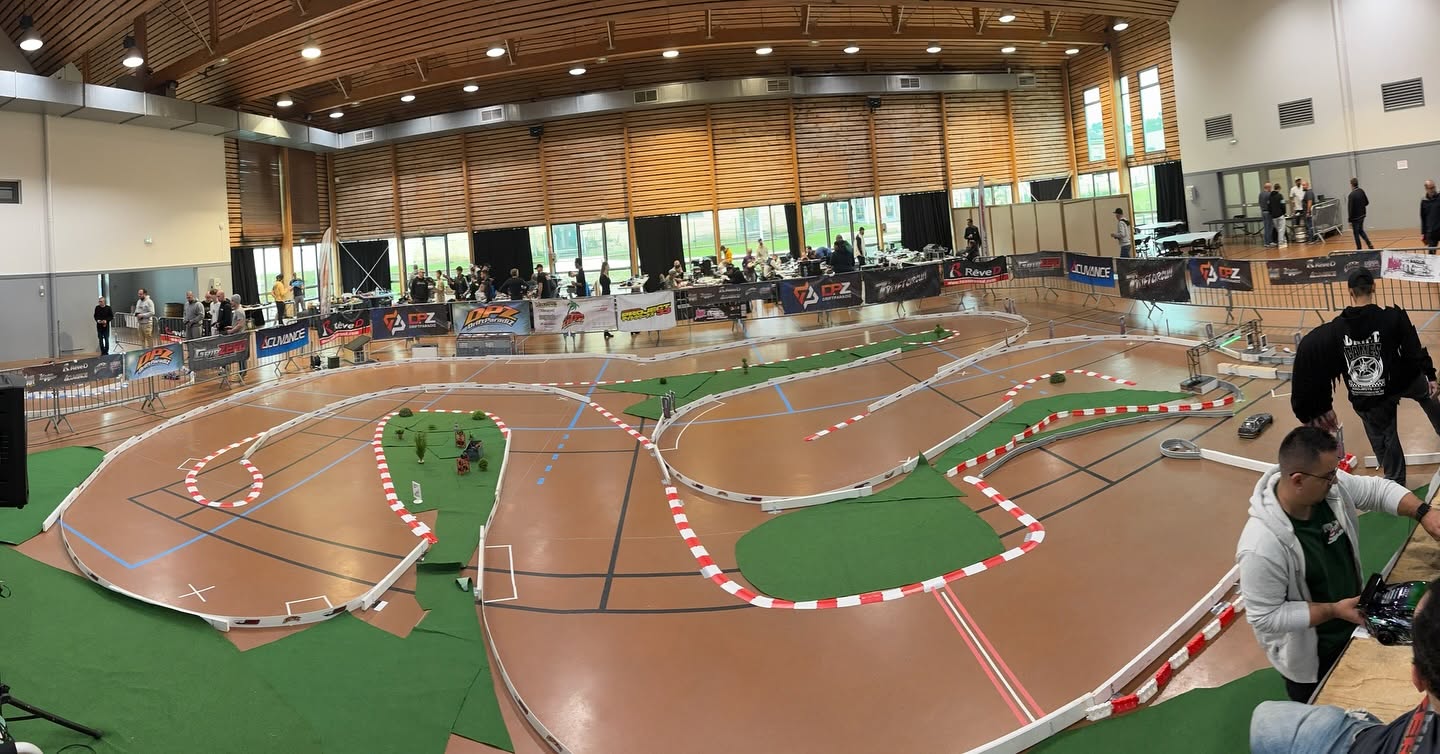
What track size do you need for RC Drift ?
One of the major advantages of RC Drift is that it can be enjoyed just as easily on a small improvised area as on a large dedicated track. It is entirely possible to start in a living room, improve in a garage, then drive on a larger layout alongside other drivers.
The ideal RC Drift track size mainly depends on your available space, the desired lane width, and the number of cars running on the track at the same time.
Can you do RC Drift in a small room ?
Yes, it is absolutely possible to start RC Drift on a small area. A living room, an empty room, or a simple garage is more than enough to learn the fundamental basics of driving.
The basics to work on in a limited space
In a confined space, driving is done at reduced speed on a slow and technical layout. It is the perfect environment for :
-
Modulating the throttle trigger
-
Maintaining a constant drift angle
-
Performing simple figures (circles, figure eights)
-
Working on direction changes (pif-paf)
-
Adjusting gyro gain
-
Practicing getting close to a few markers or cups
Practicing in a small space is extremely effective for building the precision needed before joining a real club track.
What minimum area should you plan for ?
To set up a small RC Drift course, you should allow for a minimum area of around 30 m².
The constraints of a compact 30 m² track
In this compact configuration, lane width can go down to 80 cm. The layout will be very technical and will require a high level of driving precision.
-
Recommended use : one car on track only
-
Layout type : tight corners, low speed
-
Advantage : fits easily in a garage or a large room in the house
This format is perfectly suited to beginners using a ready-to-run RC Drift RTR car who want to make their first adjustments without aiming for excessive speed.
From what surface area does RC Drift become truly enjoyable ?
RC Drift becomes genuinely comfortable and enjoyable from a surface area of 50 to 60 m².
From this size onward, the layout becomes more fluid. It becomes possible to include several sequences of corners, real load transitions, a short straight, and to offer more room to correct a line mistake. It is also the minimum surface area to start running two vehicles at the same time.
How much track width should you plan for ?
Track width directly determines the fluidity of the lines and the possibility of making overtakes or running in tandem.
The importance of track width for tandem
When you have more than 100 m², it is strongly recommended to go for lanes 1 m to 1.20 m wide. This width offers concrete benefits :
-
Choice of multiple lines (inside / outside line)
-
Ability to perform clean overtakes
-
Tandem practice (close-proximity two-car drift)
-
Reduced risk of collision
-
Better cohesion between drivers of different skill levels
What is the ideal surface area for a comfortable track ?
A track of around 120 m² is the ideal surface area for creating a complete, technical, and friendly circuit.
This area makes it possible to set up :
-
A large fast corner at the start of the layout
-
A tight and technical pif-paf section
-
A start area and a waiting paddock
-
Several clipping points (clipping points)
-
Wide 1.20 m lanes suited to group running
Can you build a much larger track ?
Yes, large clubs and regional events have tracks with a surface area ranging from 200 m² to 250 m², or even more.
These dimensions make it possible to widen the lanes slightly, increase the overall drift pace, and accommodate dozens of drivers at the same time. They also provide the space needed to include realistic scenery (curbs, safety rails, 1/10ᵉ scale buildings). However, the layouts remain designed for drift precision rather than outright speed.
Is a parking lot a good solution for driving ?
A clean, flat, and secure parking lot is an excellent alternative for driving with friends without building a permanent track. A few cups or removable curbs are enough to mark out a temporary layout.
Essential precautions before driving on a parking lot
Before placing your vehicle on a parking lot, make sure you follow these safety rules :
-
Authorization : obtain the agreement of the site owners
-
Safety : choose an area strictly closed to car and pedestrian traffic
-
Surface cleanliness : carefully sweep the area to remove stones, dust, and debris
-
Moisture : strictly avoid damp areas or puddles
To drive on parking lot asphalt, remember to equip your chassis with specific RC Drift tires for concrete and asphalt to ensure good abrasion resistance.
What size should you choose for your space ? (Summary)
The table below summarizes the characteristics according to the RC Drift track size you have available :
|
Available surface area |
Recommended lane width |
Type of use |
Comfort level |
|
~30 m² |
80 cm |
Solo practice, garage, living room |
Small, very technical layout |
|
50 m² to 60 m² |
80 cm to 1.00 m |
Start of two-car driving, transitions |
Smooth and enjoyable layout |
|
100 m² to 120 m² |
1.00 m to 1.20 m |
Full track, tandems, club |
Excellent driving comfort |
|
200 m² to 250 m² |
1.20 m to 1.50 m |
Large club track, events |
Fast, wide, and spectacular layout |
Ready to design your own RC Drift track ?
Whether you have a 30 m² garage corner or a dedicated 120 m² space, RC Drift adapts perfectly to your area. The key is to match the hardness of your tires and the geometry of your chassis to your driving surface.
Not sure which tires to choose or how to adjust your steering for your track ? Contact our team of enthusiasts to receive tailored advice !
Your questions about RC drift chassis
RWD (rear-wheel drive) reproduces realistic drift behavior ; AWD (4-wheel drive) is easier to handle for beginners.
An RTR kit comes ready to run : assembled chassis, electronics installed. All that remains is to charge the battery and take the wheel.
Yes, most chassis accept upgrade parts (suspension, differentials, electronics) to progress with your skill level.
Our BEGINNER packs

Build your car
Our advice
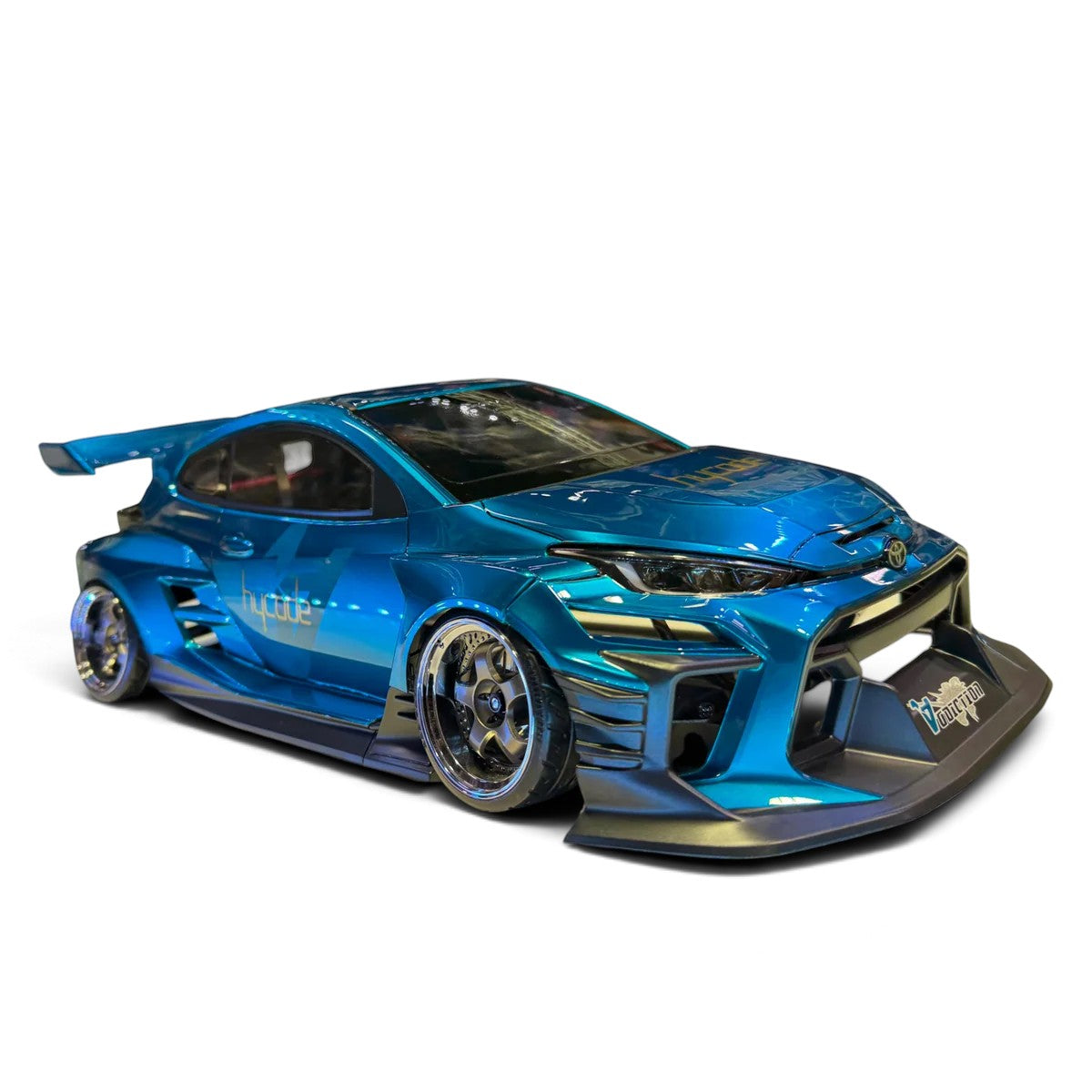
Which RC drift body shell should you choose according to your level ?
Not all RC Drift bodies have the same build difficulty. Some are molded in a single piece and are relatively simple to prepare, while others are made up of several separate elements that require mo...
What track size do you need for RC Drift ?
One of the major advantages of RC Drift is that it can be enjoyed just as easily on a small improvised area as on a large dedicated track. It is entirely possible to start in a living room, improve...
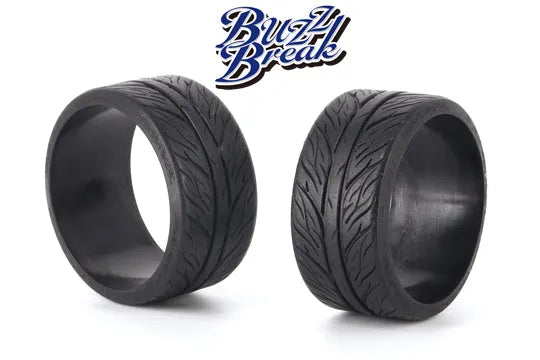
What types of tires are used in RC Drift ?
In RC Drift, cars do not use traditional rubber tires like the majority of radio-controlled vehicles. They are equipped with hard plastic tires specifically formulated to reduce mechanical grip and...
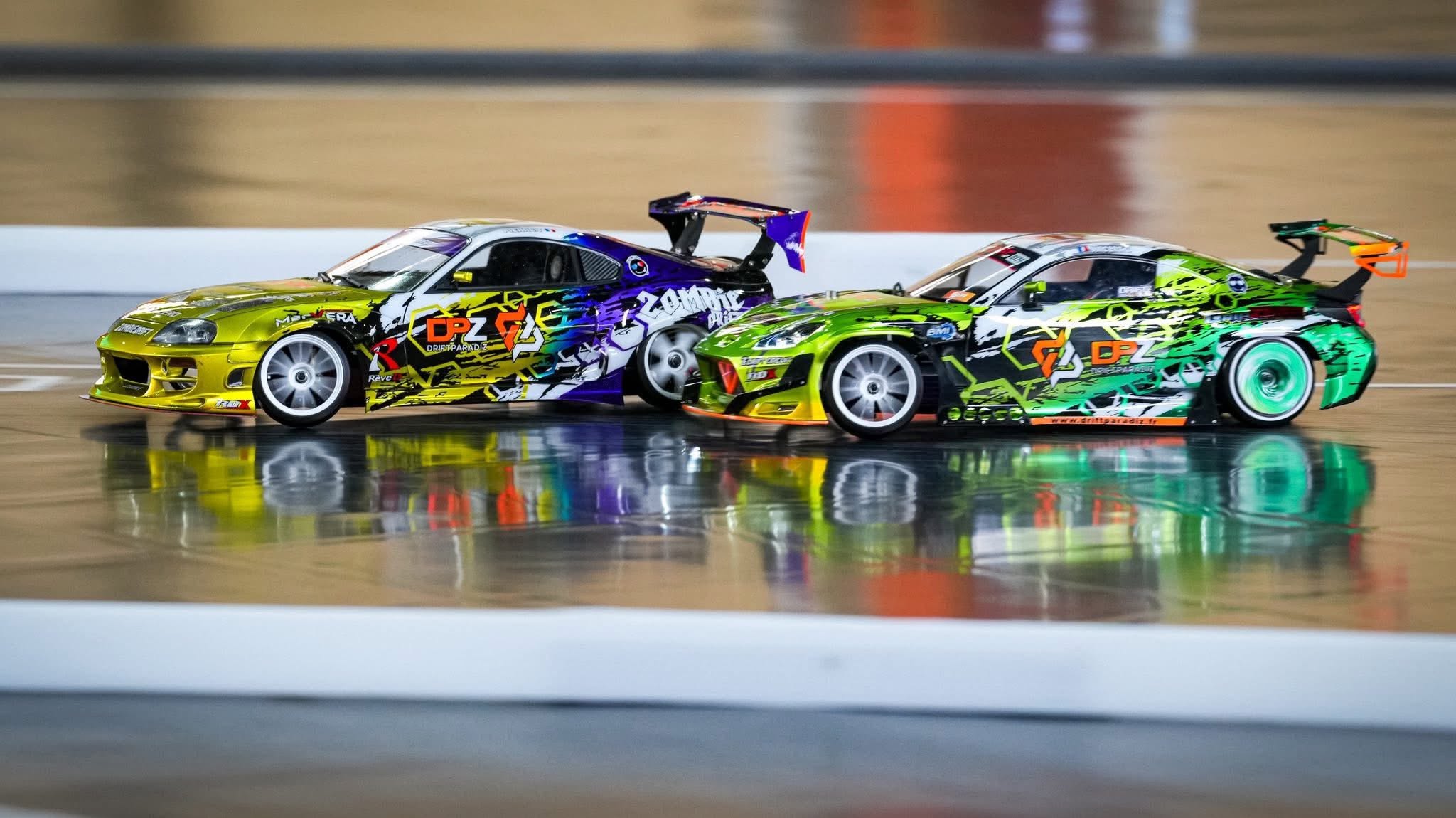
Why choose an RWD RC drift car ?
Choosing a RWD RC Drift car is essential for practicing drift RC according to the modern standards of the discipline. The acronym RWD meaning " Rear-Wheel Drive " (rear-wheel drive), this layout de...
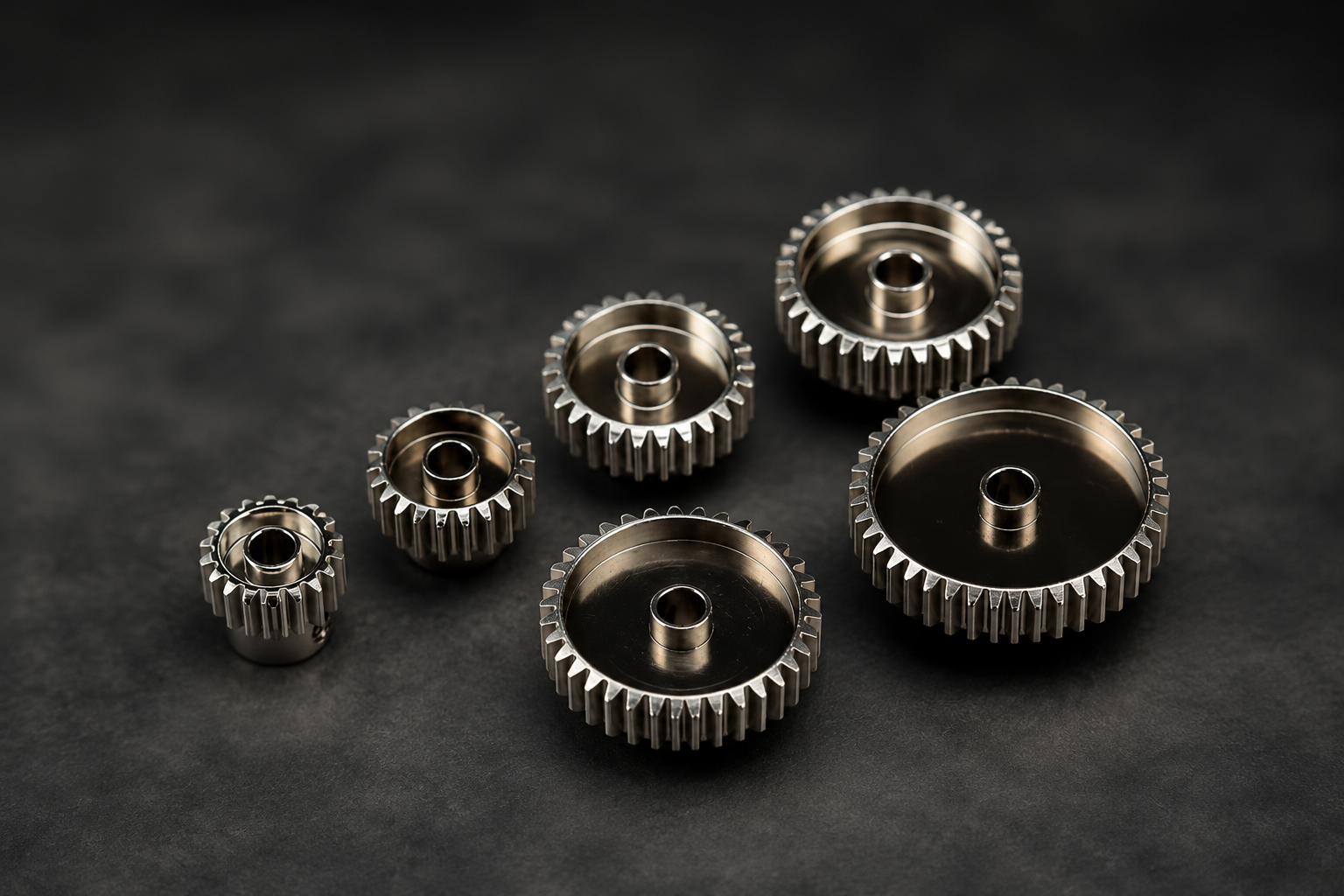
Pinion gears and spur gears : 48dp or 64dp?
In the exciting world of RC drift, two crucial components play a major role in your vehicle's performance : the pinion and the spur gear. These drivetrain elements not only determine the speed ...

Mount your RC Drift tires in 30 seconds
How to mount RC Drift tires on wheels ? When starting out in RC Drift, one question comes up regularly : how do you keep the tires on the wheels ? Do they need to be glued ? Unlike other RC model...