
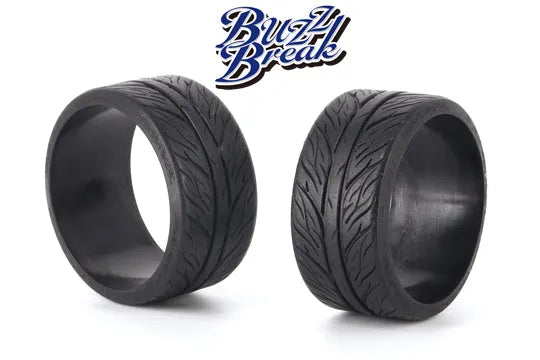
What types of tires are used in RC Drift ?
In RC Drift, cars do not use traditional rubber tires like the majority of radio-controlled vehicles. They are equipped with hard plastic tires specifically formulated to reduce mechanical grip and allow the chassis to maintain a continuous drift.
Choosing the right RC Drift tire is crucial : its chemical composition, hardness, and compatibility with the track surface directly influence speed, traction, stability, and the overall realism of your car.
Why are RC Drift tires made of plastic ?
The main goal of RC Drift is not to seek maximum grip or high top speed, but to maintain a smooth, controlled, and realistic slide.
The advantages of hard plastic compound
Thermoformed plastic tires (polypropylene, HDPE, special ABS) provide essential benefits :
-
Drastic grip reduction : allows the rear end to break traction as soon as you get back on the throttle.
-
Precise angle control : maintains a constant friction coefficient throughout the drift.
-
Progressive transitions : make it easier to transfer from one side load to the other without sudden bite.
-
Speed limitation : keeps the vehicle within a realistic speed range.
With conventional rubber tires, the chassis would have far too much grip : the car would run much too fast, build up excessive inertia, and become impossible to keep in a drift on a track sized for 1/10th scale.
How do you reproduce drift at 1/10th scale ?
RC Drift aims to faithfully reproduce the behavior of real drift cars (1:1 scale). This applies to the aesthetics and steering angle, but also to the speed on track.
Calculating speed on a dynamic scale
An RC Drift car should run at about ten times less speed than a real vehicle to maintain a coherent and smooth visual effect :
-
10 km/h at 1/10th scale ➔ Represents about 100 km/h at full scale.
-
15 km/h at 1/10th scale ➔ Represents about 150 km/h at full scale.
-
20 km/h at 1/10th scale ➔ Represents about 200 km/h in real life.
Plastic tires are what guarantee this realism : by limiting grip to the ground, they make it possible to achieve slow, stylish drifts that are easy to follow with the eye, while also allowing tandem battles down to the centimeter.
Are there different tire hardnesses ?
There is a wide choice of RC Drift tires, classified by material compounds and hardness levels.
The impact of hardness on chassis behavior
A slightly softer tire offers more traction and higher cornering speed. Conversely, an ultra-hard tire limits grip and slows the car down. The exact choice depends on several factors :
-
The type of floor surface
-
The level of grip the driver is looking for
-
The overall chassis weight and weight distribution
-
The official track or club regulations
Each manufacturer uses its own plastic chemical formulations. Two tires labeled "Medium" by two different brands can behave very differently on track.
Which tire should you choose depending on the surface ?
To achieve balanced handling, it is essential to match the right plastic compound to the right type of surface.
Summary table of Tire / Surface combinations
|
Driving surface |
Surface grip level |
Recommended tire type |
On-track behavior |
|
Needle-punched carpet / synthetic carpet |
High |
Hard / Ultra-hard tire |
Smooth sliding without excessive grip |
|
Polished concrete / Painted concrete |
Medium |
Medium/hard tire |
Excellent traction / slide compromise |
|
Resin / Epoxy / Tile |
Low to medium |
Soft / Medium tire |
Provides the necessary traction |
|
Asphalt / Smooth tarmac |
Variable / Abrasive |
HDPE tire specifically for asphalt |
Greater wear resistance |
A tire designed for carpet will be too slippery or will lack grip on tile. Before changing your suspension settings or your gyro, always check that your tires are suited to your surface. Discover our RC Drift tires by surface to equip your chassis.
What surfaces can RC Drift be practiced on ?
RC Drift offers the advantage of being usable on almost any flat, clean, and even surface.
Suitable playing surfaces for RC Drift
You can run your vehicle :
-
On a dedicated club RC Drift track (carpet or resin)
-
In a garage, workshop, or room in the house (tile, hardwood floor)
-
On polished concrete, resin, or epoxy
-
On a very smooth, dust-free asphalt parking lot
Which surfaces should be avoided ?
Although highly versatile, a RWD RC Drift car has very low ground clearance (between 5 mm and 7 mm) and precision mechanics that require certain surfaces to be avoided.
Environments prohibited for drift RC modeling
You absolutely must avoid :
-
Loose surfaces : dirt, grass, gravel, sand, and mud.
-
Water and rain : puddles, soaked ground, or very damp surfaces.
-
Damaged surfaces : cracked concrete, large holes, and loose stones being thrown up.
Abrasive dust, small stones, and sand work their way into the belts, gears, and bearings, risking a seized drivetrain. Water, meanwhile, presents a destructive short-circuit risk for the ESC, the servo, the receiver, and the LiPo battery.
Can the same tires be used on all surfaces ?
While it is technically possible to slide the same tire on different surfaces, the driving experience will not be optimal.
The importance of a tire suited to track regulations
With an unsuitable tire, the vehicle may understeer, spin out systematically, or destroy its plastic contact patch prematurely.
On most professional tracks and RC Drift clubs, a specific tire is mandatory for all drivers. This ensures that all chassis run at the same speed, making it possible to perform tight and spectacular tandem runs.
Ready to choose the right tires for your track ?
The RC Drift plastic tire is your vehicle's number 1 tuning element. It determines grip, transition speed, and the quality of your drifts.
By matching your tire compound to your driving surface and avoiding wet or dusty surfaces, you preserve your mechanics while enjoying exceptional realism.
To select the ideal setup for your surface, discover our full range of tires and wheels for RC Drift on our online store.
Not sure which compound is right for your track ? Contact our team of specialists for personalized technical advice !
Your questions about RC drift chassis
RWD (rear-wheel drive) reproduces realistic drift behavior ; AWD (4-wheel drive) is easier to handle for beginners.
An RTR kit comes ready to run : assembled chassis, electronics installed. All that remains is to charge the battery and take the wheel.
Yes, most chassis accept upgrade parts (suspension, differentials, electronics) to progress with your skill level.
Our BEGINNER packs

Build your car
Our advice
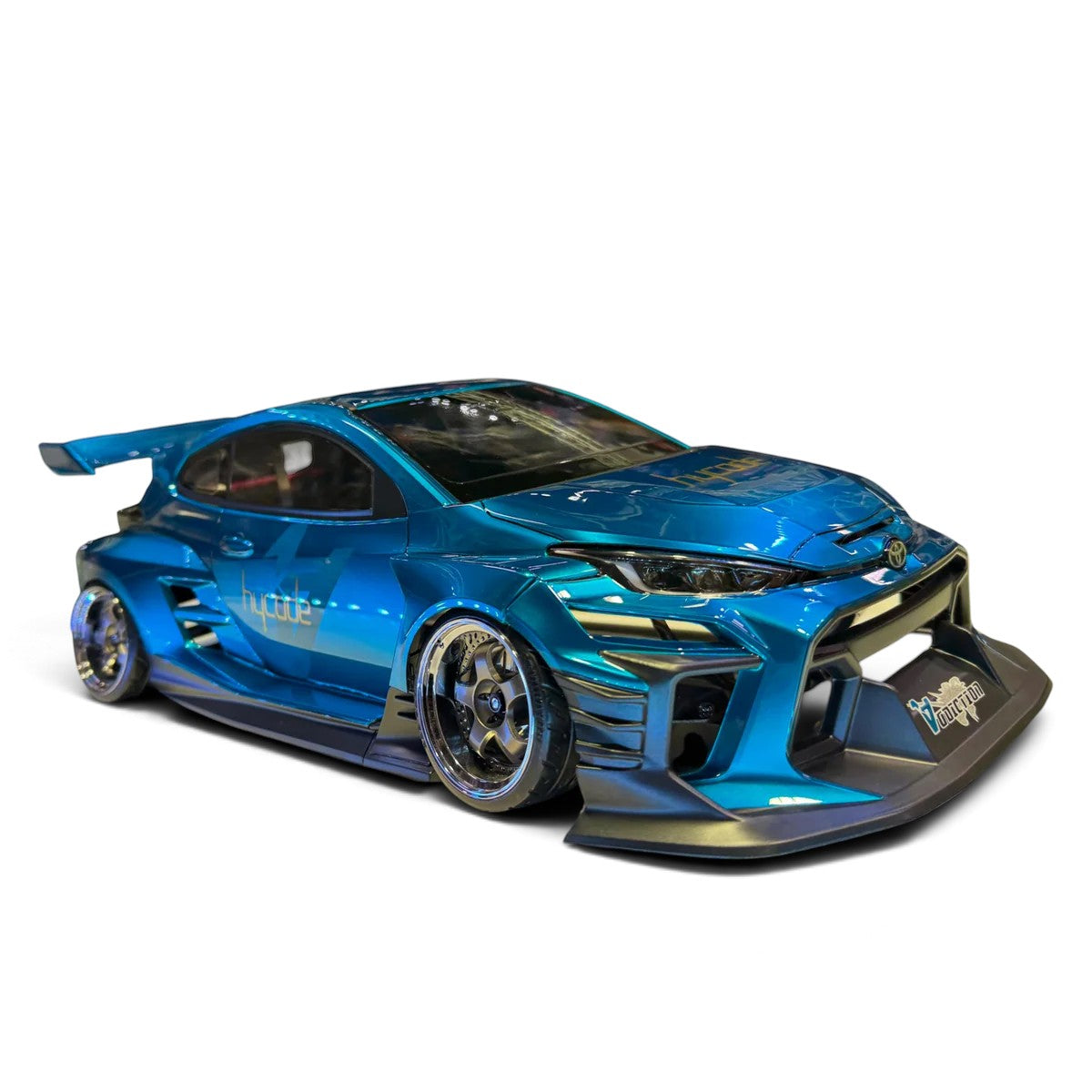
Which RC drift body shell should you choose according to your level ?
Not all RC Drift bodies have the same build difficulty. Some are molded in a single piece and are relatively simple to prepare, while others are made up of several separate elements that require mo...
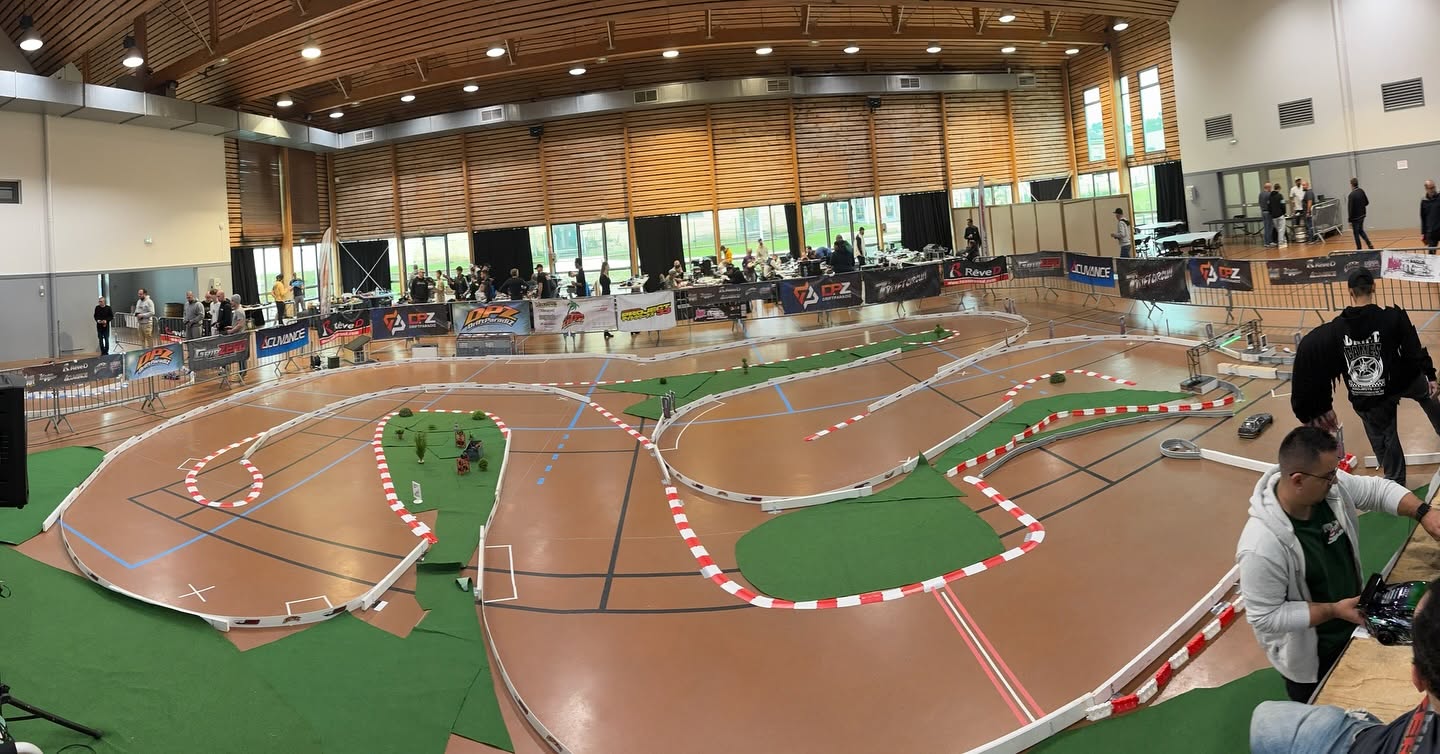
What track size do you need for RC Drift ?
One of the major advantages of RC Drift is that it can be enjoyed just as easily on a small improvised area as on a large dedicated track. It is entirely possible to start in a living room, improve...
What types of tires are used in RC Drift ?
In RC Drift, cars do not use traditional rubber tires like the majority of radio-controlled vehicles. They are equipped with hard plastic tires specifically formulated to reduce mechanical grip and...
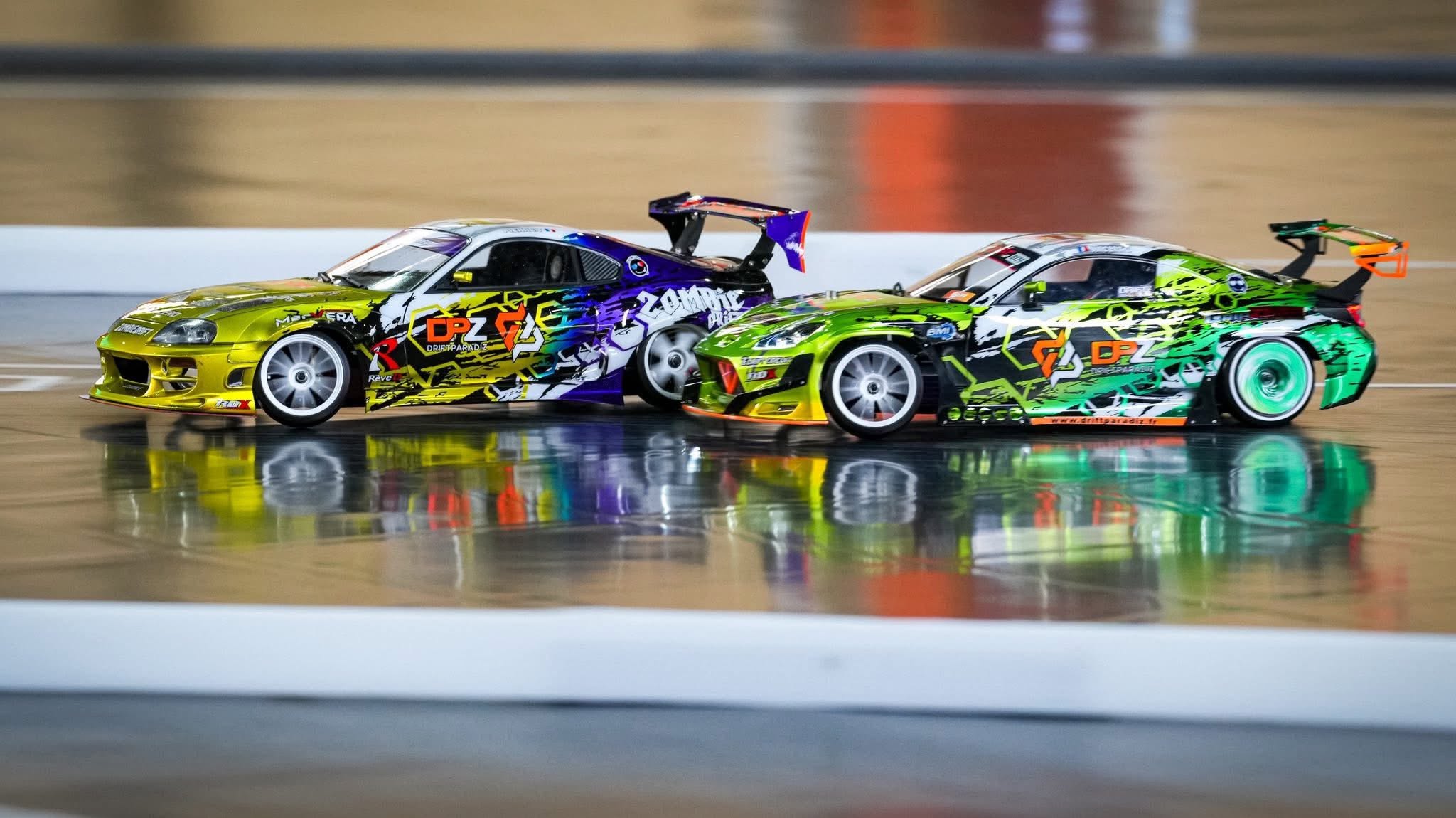
Why choose an RWD RC drift car ?
Choosing a RWD RC Drift car is essential for practicing drift RC according to the modern standards of the discipline. The acronym RWD meaning " Rear-Wheel Drive " (rear-wheel drive), this layout de...
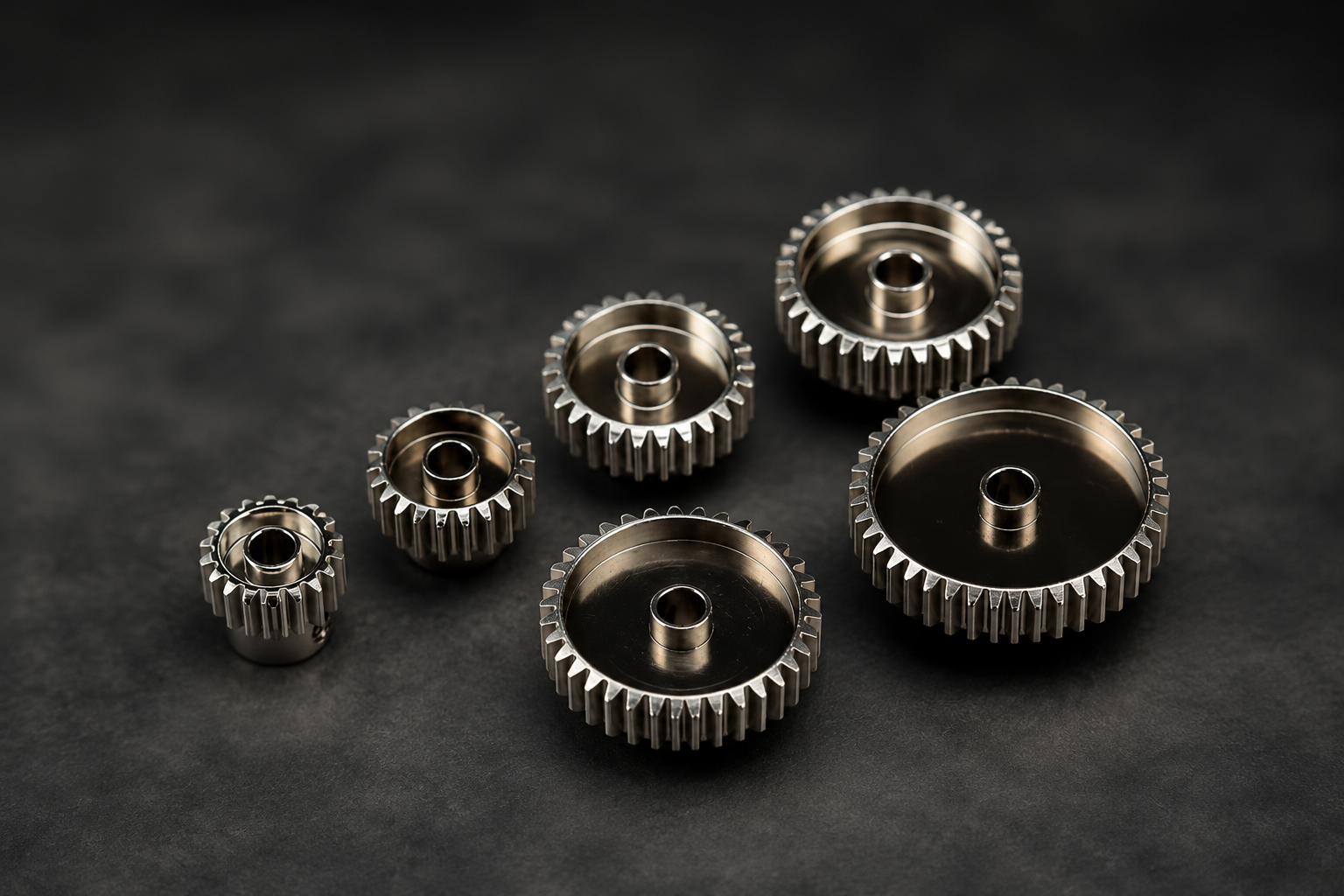
Pinion gears and spur gears : 48dp or 64dp?
In the exciting world of RC drift, two crucial components play a major role in your vehicle's performance : the pinion and the spur gear. These drivetrain elements not only determine the speed ...
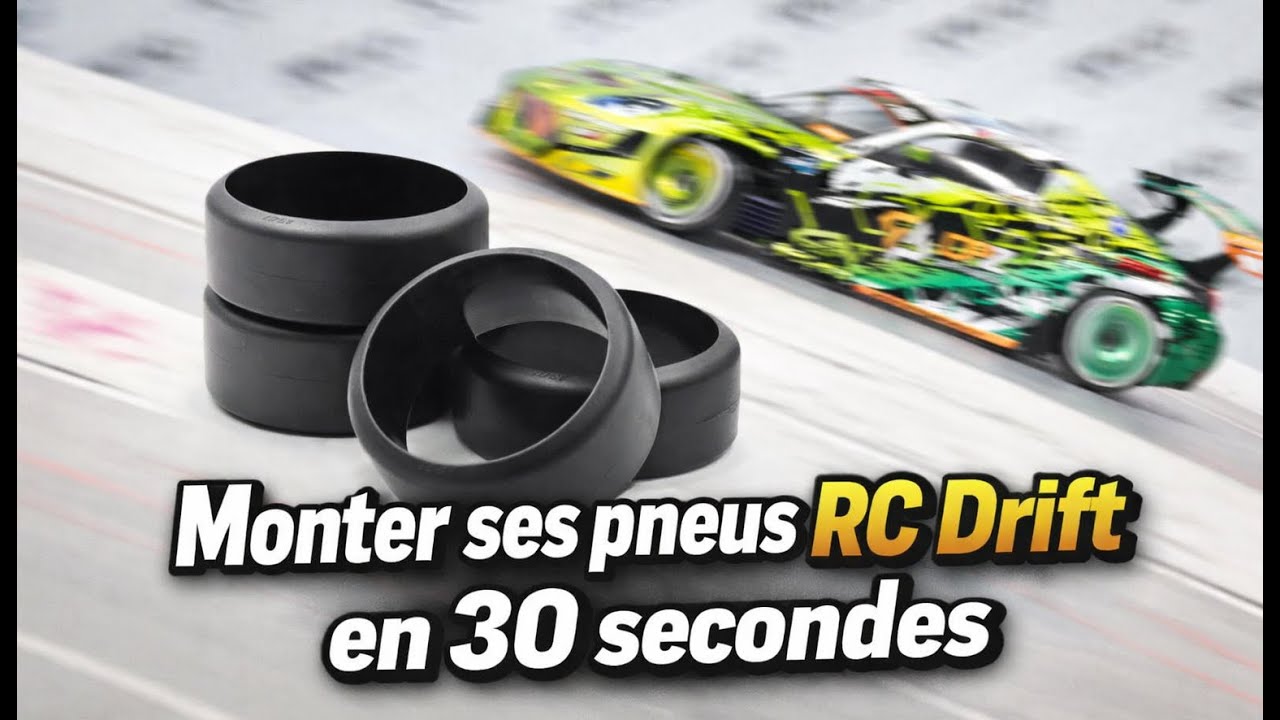
Mount your RC Drift tires in 30 seconds
How to mount RC Drift tires on wheels ? When starting out in RC Drift, one question comes up regularly : how do you keep the tires on the wheels ? Do they need to be glued ? Unlike other RC model...